A summer storm on the walk to the car, a spilt glass on the lounge, a bag left on wet grass. Water marks on leather look alarming, but on smooth, finished leather many can be improved if you dry it slowly and condition it once it is dry. This guide covers how to remove water stains from leather, what to avoid while it dries, and when a mark has set for good.
Quick answer: Blot the water straight away, never rub. Let the item dry at room temperature, away from heaters, hair dryers and direct sun. Once it is fully dry, wipe the whole panel with a barely damp cloth, let it dry again, then work in a thin coat of conditioner with a sponge. On suede, nubuck and fully aniline leather a mark can be permanent, so test before you treat.
Why water leaves a mark on leather
Leather is a skin, and it loses its oils over time, faster in Australian heat. Water soaks into unfinished leather, and the edge of the wet patch is where the ring shows once it dries.
Finished leather, which has a sealed surface, mostly sheds water. Unfinished leather drinks it in. You can tell which you have with the water drop test from our guide to whether Renapur darkens leather: put one drop of water on a hidden spot. If it beads, the leather is finished. If it soaks in and leaves a dark spot, it is unfinished, and you need to be far more careful with it.
What to do in the first ten minutes
Act quickly, and work through this list before anything else:
- Blot standing water with a clean, dry, soft cloth. Press, lift, move on. Blot rather than rub.
- Empty bags and pockets so wet contents are not pressed against the leather.
- Stuff a wet handbag or boot with paper so it holds its shape while it dries.
- Hang a wet jacket on a wide, shaped hanger so the shoulders do not sag.
- Leave it somewhere airy at room temperature.
How to remove water stains from leather, step by step
This method is for smooth, finished leather: most handbags, jackets, boots, lounges and car seats. Check the leather type first, as above.
- Let it dry completely. Room temperature only. Renapur's own care guide is plain on this: do not use heat to dry wet leather, because heat draws out the oils leather needs. That rules out heaters, hair dryers, the car dashboard and a sunny windowsill.
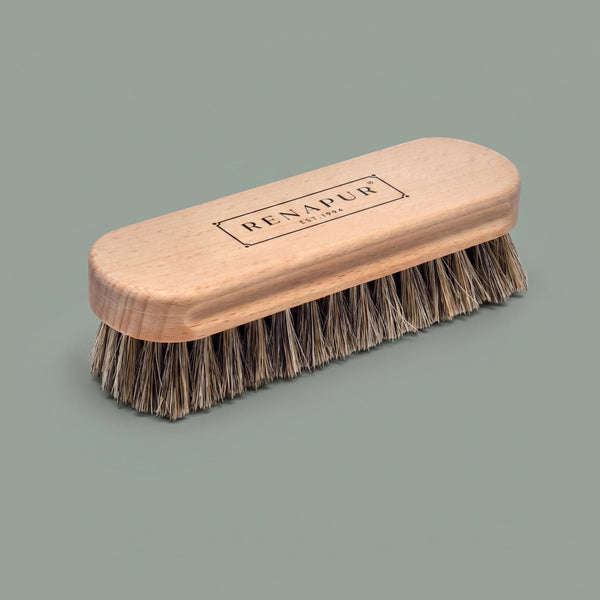
- Brush off dry dirt. Rain often leaves grit behind. A soft brush such as the Renapur Horsehair Brush lifts dust and dry dirt before you clean or condition.
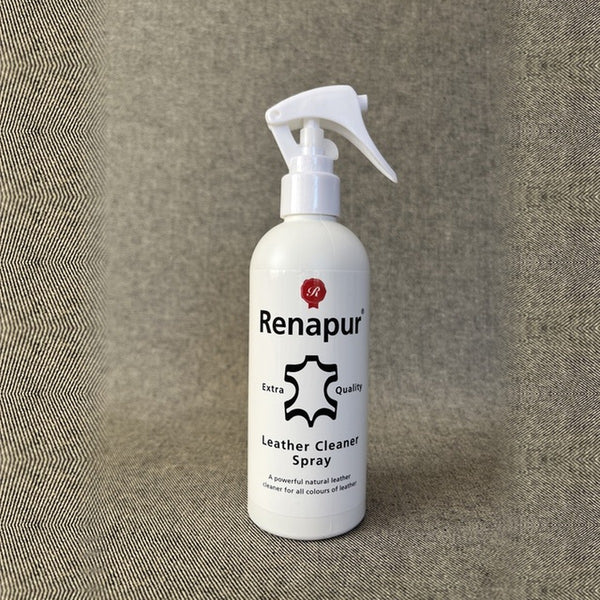
- Wipe the whole panel, not just the ring. Use a soft cloth that is barely damp and work seam to seam over the marked panel, then let it dry again at room temperature. If the water picked up dirt, a little Renapur Leather Cleaner Spray on the cloth lifts it. Renapur suggests leaving the cleaner for about 30 seconds on dirtier leather before wiping.
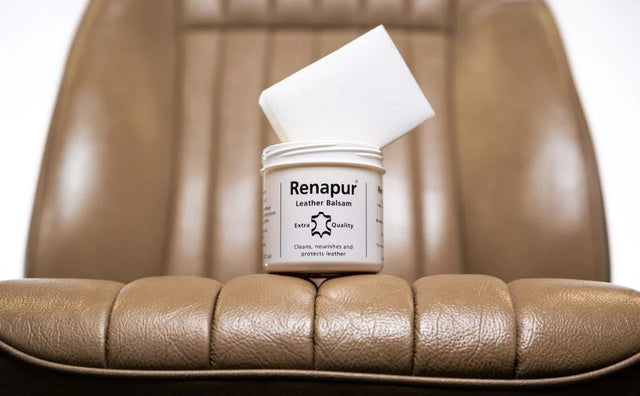
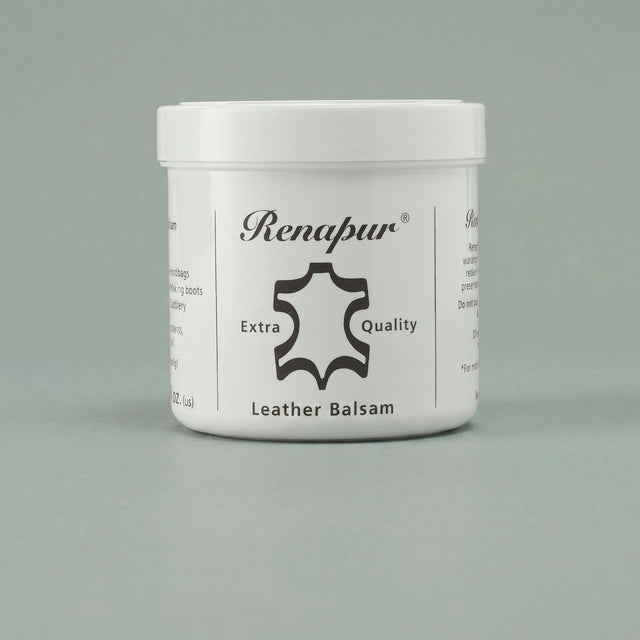
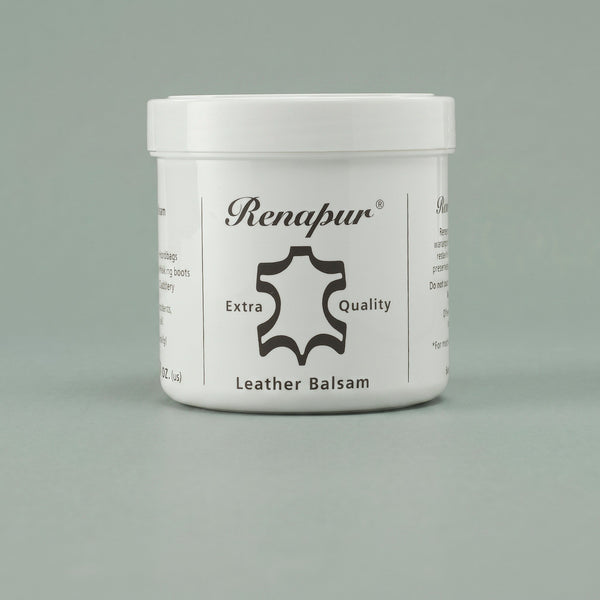
- Condition once dry. Work a thin coat of Renapur Leather Balsam into the leather with a sponge, panel by panel. Renapur's help centre says if you can see the balsam on the sponge, you are using too much. No buffing is needed. Wipe off any excess with a soft cloth.
- Check it the next day. Look at it in daylight. If the ring is still obvious, read the section below on marks that will not come out before you add more product.
Suede, nubuck and aniline leather
These materials need different handling, and the usual fixes can make things worse. Renapur does not recommend its balsam on suede, nubuck or fully aniline leather, or its cleaner on suede and nubuck. On those materials they are likely to darken the leather permanently and change the texture.
For suede and nubuck, let the item dry naturally, then brush it to bring the nap back up. Renapur recommends keeping one horsehair brush for suede that has never touched wax, and a separate one for balsam work, so wax never ends up on the nap. Once it is clean and dry, the Suede, Nubuck and Fabric Protector guards it against water and stains without changing the look or feel. It looks darker while wet and returns to its original colour once it has dried for 24 hours. Our guide to what not to use on suede and nubuck covers the rest.
What not to do
Avoid these while the leather is wet or drying:
- Heat of any kind to speed up drying.
- Scrubbing the mark, or rubbing it with a dry cloth.
- A heavy coat of conditioner on wet leather. Wait until it is fully dry.
- Kitchen oils, baby wipes or household sprays.
- Sealing a damp item in a plastic bag. Plastic traps moisture, which leads to mould.
When a water stain will not come out
Here is the honest part. Not every water mark comes out, and no cleaner or conditioner can promise it will. Renapur's cleaner is for everyday dirt and grime, and Renapur says plainly that it is not a stain remover for established marks. On unfinished or aniline leather the water has soaked into the leather itself, and a ring there can stay for good.
If a mark is still obvious after the leather has dried and been conditioned once, stop. Piling on more product will not fix it, and too much balsam is the most common reason leather looks greasy or darker. For a valuable bag or jacket, a professional leather repairer is the next step.
How to stop water stains next time
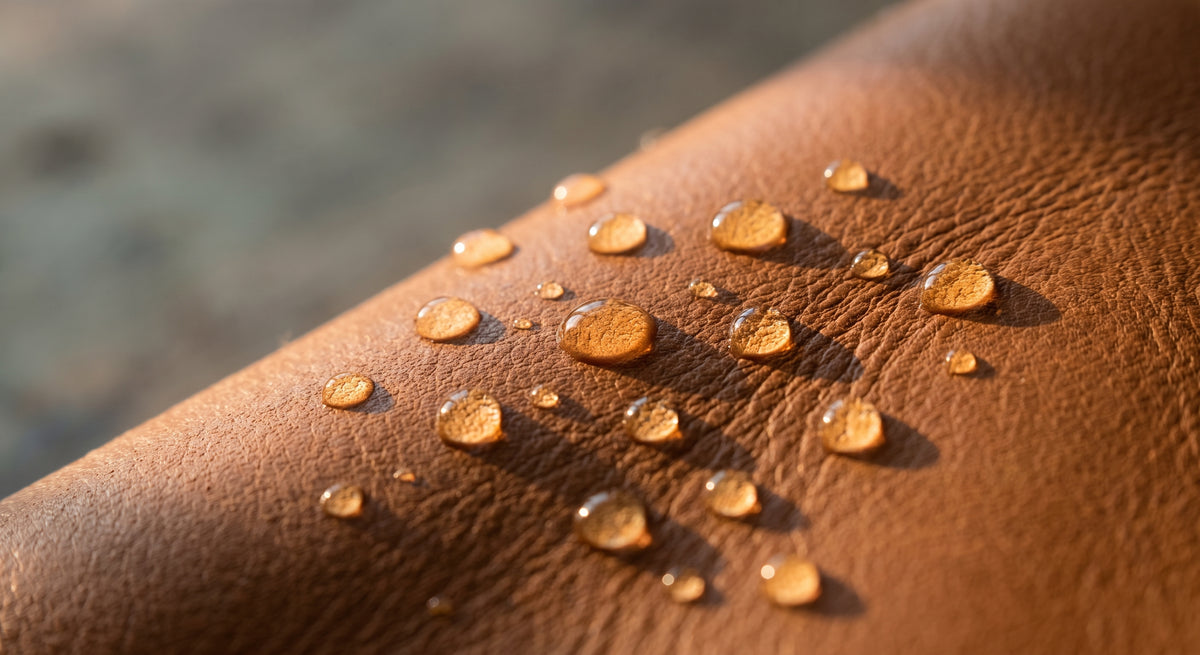
A conditioned surface sheds light rain much better than a dry one. On smooth leather treated with Renapur, water beads on the surface instead of soaking in, which makes a mark less likely. Renapur describes the balsam as helping to waterproof, not as a waterproofing membrane, so it is protection, not a guarantee in a downpour.
How often depends on the item. Renapur's help centre suggests every 3 to 6 months for handbags, wallets and belts, and every 2 to 4 weeks for boots and gear that sees regular rain. For storage and day-to-day care, see our guide to caring for a leather jacket and handbag. The full range of sizes is in our leather conditioner collection, and bag and jacket care is in fashion and accessories.
Shop the routine
Keep reading
Frequently asked questions
Can water stains on leather be removed?
Often, on smooth, finished leather, a water stain can be improved by drying the leather slowly at room temperature, wiping the whole panel evenly with a barely damp cloth and giving it a thin coat of conditioner once dry. On suede, nubuck and fully aniline leather, the water soaks into the leather itself and a mark can be permanent.
Should I use a hair dryer to dry wet leather?
No. Do not use heat to dry wet leather, because heat draws out the oils leather needs and can leave it stiff and prone to cracking. Blot it, stuff bags and boots with paper, and let it dry at room temperature away from heaters and direct sun.
Will Renapur Leather Balsam remove a water stain?
Renapur Leather Balsam is a conditioner, not a stain remover. Used once the leather is dry, it puts back the oils and helps water bead on the surface next time. It should not be used on suede, nubuck or fully aniline leather, where it is likely to darken the leather.
How do I get water marks out of suede?
Let the suede dry naturally, then brush it with a soft brush to lift the nap. Do not use leather balsam or leather cleaner on suede, as both can permanently darken it. Once it is clean and dry, a suede protector spray helps stop the next spill from marking.
How long should leather dry before I condition it?
Wait until it is fully dry all the way through. Renapur's care guide says to let wet leather dry at room temperature first and condition it after, never with heat to speed it up. Test a hidden spot first and check it in daylight once dry before treating the whole item.