A bridle works harder than its size suggests. It sits against a sweaty horse, it bends at every buckle, and the reins carry your hands for the whole ride. This guide covers how to clean and condition a bridle, plus reins, leather girths and riding boots, the gear riders handle every day.
Quick answer: Wipe the bridle with a damp sponge after every ride. Every week or two, take it apart, clean each strap with a pH neutral leather cleaner, paying most attention to the buckles and keepers, and let it dry away from direct sun. Then work a thin coat of leather balsam into both sides of every strap with a sponge. Renapur suggests conditioning working tack every 2 to 4 weeks.
For the saddle itself, oil versus balsam and saddle soap, see our guide to saddle and tack leather care. This one stays with the smaller gear.
Why bridles and reins wear out first
Salt in sweat pulls moisture out of leather, dust is abrasive, and a hot tack room bakes off what oil is left. The straps that bend and carry load, reins, girth straps and stirrup leathers, suffer first.
A bridle has all three problems in a small space. The cheekpieces and noseband sit on sweat, the reins take constant flexing, and every buckle and keeper is a fold where grease and grime collect. Renapur's care guide singles out straps, billets and stitching as the places sweat and water do the most damage.

What you need
- A bucket of clean water and a sponge for the daily wipe.
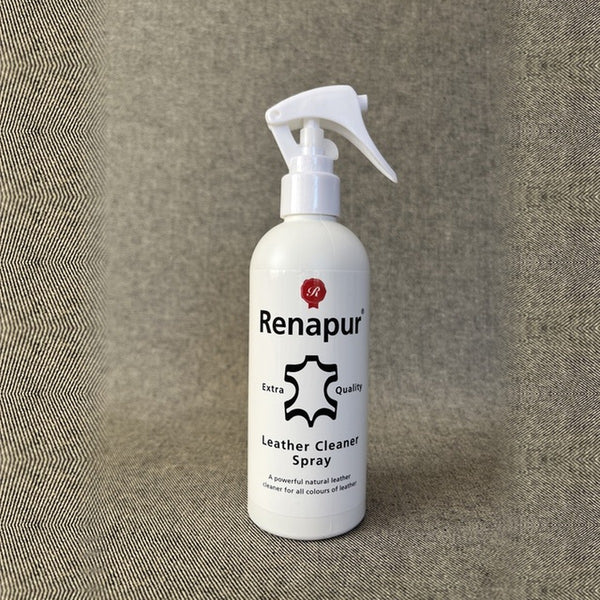
- Renapur Leather Cleaner Spray, which is pH neutral and fully biodegradable.
- Renapur Leather Balsam and its applicator sponge.
- A soft brush for stitching and any tooling. The Renapur Horsehair Brush is made to work balsam into seams and tooled saddlery that a sponge cannot reach.
- A soft cloth for wiping off excess.
How to clean and condition a bridle, step by step
- Take it apart. Unbuckle the cheekpieces, noseband, throatlatch and reins, and take the bit off. You cannot clean inside a buckle fold with it done up.
- Wipe off the sweat. A damp sponge removes fresh sweat and dirt.
- Clean each strap. Spray the cleaner onto a sponge and work along each strap, front and back. Spend longest at the buckles and keepers, where grease builds up. On heavy grime, leave the cleaner for about 30 seconds before wiping.
- Let it dry. Hang the pieces somewhere airy, away from direct sun. Do not use heat; Renapur's care guide says heat draws out the oils leather needs.
- Condition both sides. Work a thin coat of balsam into the grain side and the flesh side of every strap, into the folds and the holes. Use the brush along the stitching. If you can see the balsam on the sponge, you are using too much.
- Check while it is apart. Look at the stitching at the buckles and the rein ends, and at the holes for stretching or splitting.
- Put it back together once the balsam has settled. No buffing is needed; wipe off any excess with a soft cloth.
Reins
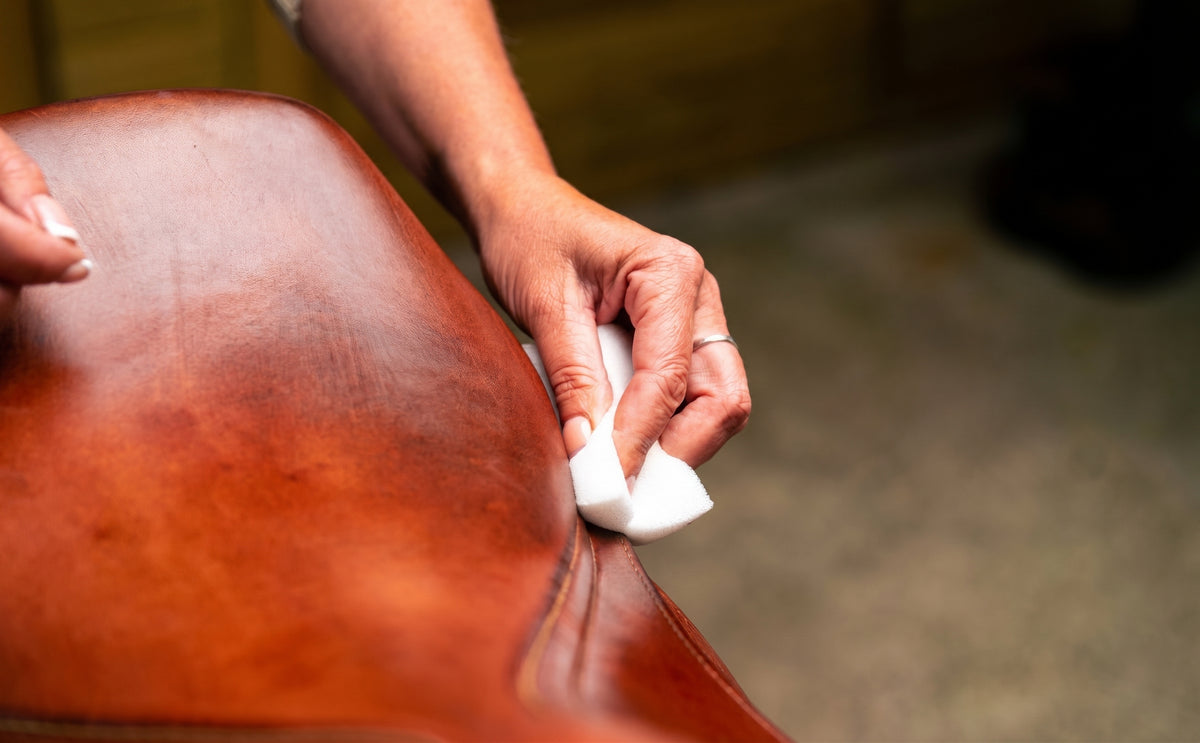
Reins are flexed constantly, so they show dryness first. Work the balsam along the full length and bend the rein through your hand as you go so it gets into the creases.
Many reins are not all leather. Rubber grips, webbing and plaited fabric sections are common. Keep the balsam to the smooth leather parts: Renapur makes it for smooth leather, and recommends a different product for fabric. Applied thinly, Renapur dries non sticky, and leaves no smell to bother the horse.
Leather girths
A leather girth sits directly against the horse and soaks up a lot of sweat. Wipe it after every ride, before the sweat dries.
Condition the leather the same way as the bridle, with extra attention to the girth straps and buckle ends. Many girths have elastic inserts or a fabric or synthetic lining. Keep the balsam off those parts; it is made for real, smooth leather, and on synthetic materials it is likely to sit on the surface and look greasy.
New bridles
A new bridle is often stiff. Several thin coats over a couple of weeks, along with regular handling and use, soften it better than one heavy coat. Bend the cheekpieces and reins as you condition them.
Here is the honest caveat: oil works faster, and that is the trap. Traditional oils such as neatsfoot noticeably darken leather, and too much leaves it limp and stretchy, which is the last thing you want in a cheekpiece or rein. A balsam conditions without over softening. If the bridle is a light colour you want to keep, test under a strap end or keeper first and check it once dry, because even a balsam can darken some leathers.
Riding boots
Smooth leather long boots and paddock boots take the same care as smooth leather tack. Brush off the arena dust, clean them, let them dry at room temperature and condition with a thin coat. Give the flex creases extra attention, because that is where cracking starts. Renapur says its balsam lets the leather breathe, so it is fine on boots with a Gore-Tex lining.
Suede or nubuck panels on boots and half chaps are different. Keep balsam off them, as it flattens and darkens the nap. Brush them, and use the Suede, Nubuck and Fabric Protector once they are clean and dry. For more on boots, see our guide to the best leather conditioner for boots in Australia.
How often, and after rain
Renapur's help centre puts horse tack in its high wear group: condition every 2 to 4 weeks, more often in wet seasons or after a heavy downpour. Tack hanging indoors between outings needs much less than tack in daily work. The signs it needs a top up are stiffness, a dry look or lost water resistance. If you see residue building up in the stitching, you are conditioning too often.
After a wet ride, wipe off the mud, hang the pieces to dry at room temperature and condition once they are dry. Store tack somewhere airy, not in plastic, which traps moisture and leads to mould.
Yards and riding schools usually go through more than a household jar. The equestrian collection has the larger sizes, and every balsam size is in the leather conditioner range. Unsure about a piece of tack? Our guide on whether Renapur darkens leather explains the water drop test.
Shop the routine

Keep reading
Frequently asked questions
How often should I clean my bridle?
Wipe your bridle with a damp sponge after every ride, and take it apart for a full clean every week or two. Renapur suggests conditioning working tack every 2 to 4 weeks, and more often in wet weather or when the leather starts to feel stiff or look dry.
Can I use Renapur on reins?
Yes, on smooth leather reins. Work a thin coat along the full length and flex the rein as you go. Keep it off rubber grips, webbing and fabric sections. Applied thinly, the balsam dries non sticky, so it should not make the reins greasy in your hands.
How do I soften a stiff new bridle?
Apply several thin coats of conditioner over a couple of weeks rather than one heavy coat, and bend the cheekpieces and reins while you work it in. Regular handling and use do the rest. Test a hidden spot first if you want to keep a light colour.
Can I use leather balsam on a girth with elastic?
Yes, on the leather parts only. Condition the leather body and girth straps, and keep the balsam off elastic inserts and any fabric or synthetic lining. Renapur Leather Balsam is made for smooth, real leather, and on other materials it is likely to sit on the surface.
Do I clean riding boots the same way as tack?
Smooth leather riding boots, yes: brush, clean, dry at room temperature and apply a thin coat of balsam, focusing on the flex creases. Suede or nubuck panels and half chaps need a brush and a suede protector instead, never balsam.