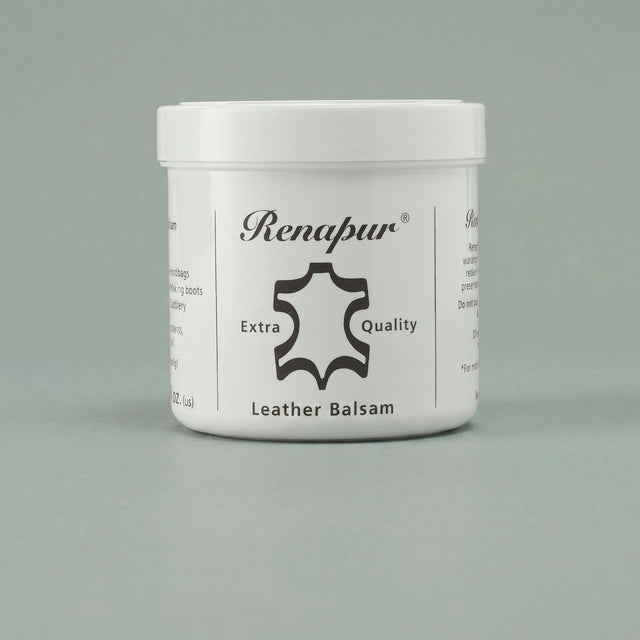
If you own R.M. Williams boots, the question comes up sooner or later: stick with R.M. Williams' own leather conditioner, or use something like Renapur Leather Balsam? Both are beeswax based and both are made to stop leather drying out. This guide compares Renapur vs R.M. Williams leather conditioner using only what each maker publishes about its own product, so you can choose for your boots, saddle or bag.
Quick answer: Both suit smooth, finished leather and neither goes on suede. R.M. Williams Leather Conditioner is a beeswax and lanolin conditioner, made in Australia, that you leave to soak in and then buff, and it costs less per millilitre. Renapur Leather Balsam is a beeswax, carnauba wax, jojoba oil and avocado oil balsam, made in Britain, that goes on in one very thin coat with no buffing. Choose R.M. Williams to follow the bootmaker to the letter; choose Renapur for one jar that also looks after your lounge, car seats, bags and tack. In fairness, we sell Renapur.
Is Renapur or R.M. Williams conditioner better?
Neither is better at everything. R.M. Williams writes its conditioner advice around its own boot leathers, and its care guide is clear about which of those leathers should never be conditioned at all. Renapur is written for smooth leather of every kind, from boots and bags to sofas and saddles.
The useful question is how you like to work and what else you need to look after. The R.M. Williams method is a coat, a wait of up to an hour and a buff. The Renapur method is a thin coat with nothing to buff.
Side by side
Every point below comes from each maker's own published information, checked on 2 November 2026.
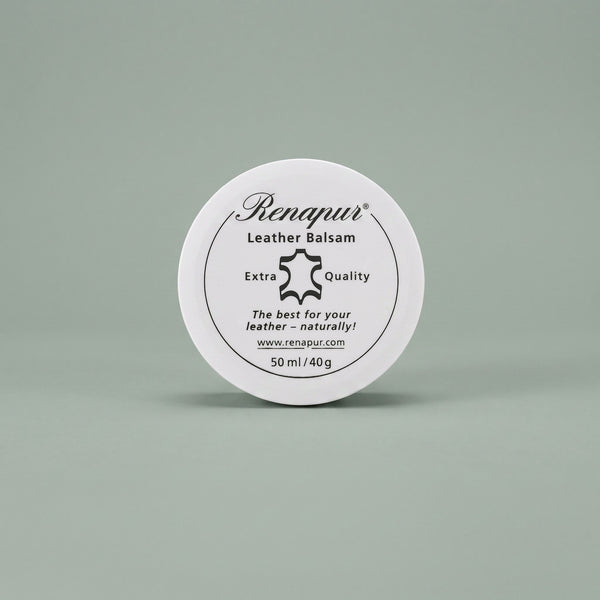
Renapur Leather Balsam
- Made: in Britain, since 1994.
- Form: solid balsam in a jar, applied with a sponge.
- What the maker says is in it: beeswax, carnauba wax, jojoba oil and avocado oil, with no solvents or silicones. The full formula is not published.
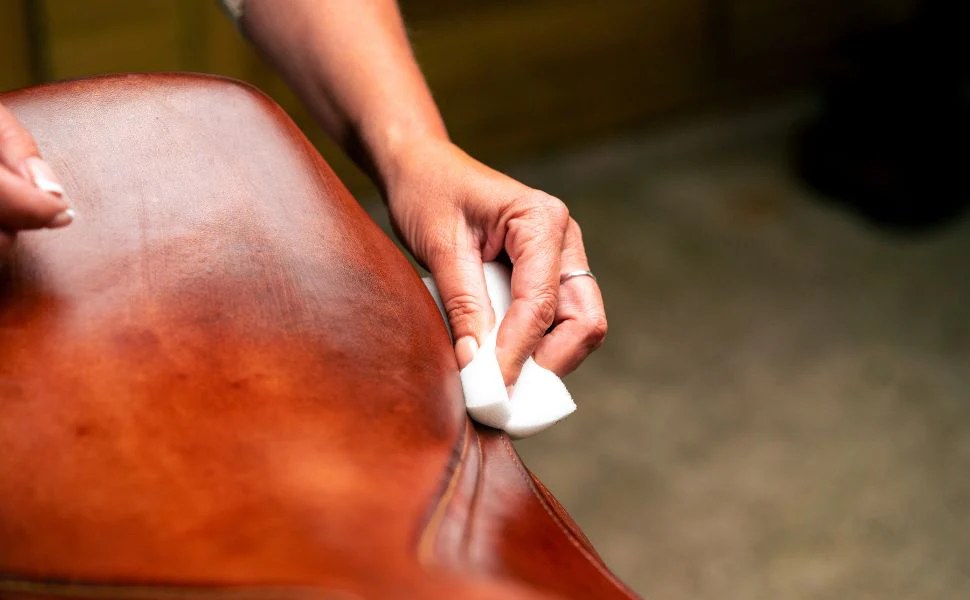
- Application: one very thin coat. If you can see balsam on the sponge, you are using too much. No buffing when it goes on sparingly.
- Drying: applied that thinly, Renapur says it absorbs and dries almost instantly.
- How often: every 2 to 4 weeks for work boots, hiking boots and tack; every 3 to 6 months for bags and belts; once or twice a year for sofas and car seats.
- Not for: suede, nubuck or fully aniline leather.
- In Australia: $17.50 for 50ml and $29.50 for 200ml, with free shipping, sent from Batemans Bay, NSW.
R.M. Williams Leather Conditioner
- Made: in Australia, according to its product page.
- Form: conditioner sold in 100ml and 500ml sizes.
- What the maker says is in it: beeswax, lanolin and a natural blend.
- Application: apply evenly with a clean cloth or your hands, let it penetrate, then buff off the excess to a soft sheen.
- Drying: on pigmented finished leathers, R.M. Williams says to let it penetrate for about an hour.
- How often: every 2 to 3 months for leather boots, however often you clean or polish them.
- Not for: suede or burnished leather. R.M. Williams also says its nutmeg yearling and tanbark kangaroo take no conditioner.
- In Australia: $19 for 100ml and $29 for 500ml on the R.M. Williams website.
Beeswax and lanolin, or beeswax and jojoba: does it matter?
Less than you might think. Both are wax based, and both makers say their product helps leather resist water. R.M. Williams says its conditioner protects, softens and helps to repel water on a wide range of leather goods. Renapur says jojoba oil works into the leather fibres while beeswax leaves a breathable, water resistant layer on the surface.
The honest caveat on price: per millilitre, the R.M. Williams 500ml is much cheaper than our 200ml jar, about $5.80 per 100ml against $14.75. Renapur's case is that a little goes a long way and that one jar covers far more than boots, not that it costs less.
Which is better for R.M. Williams boots?
For smooth yearling, black or chestnut kangaroo and other pigmented finished leathers, either works. R.M. Williams says its conditioner should be applied regularly to pigmented finished leather to stop it drying out or cracking, and Renapur suits smooth, finished leather of the same kind. Our guide to conditioning R.M. Williams boots has the full routine.
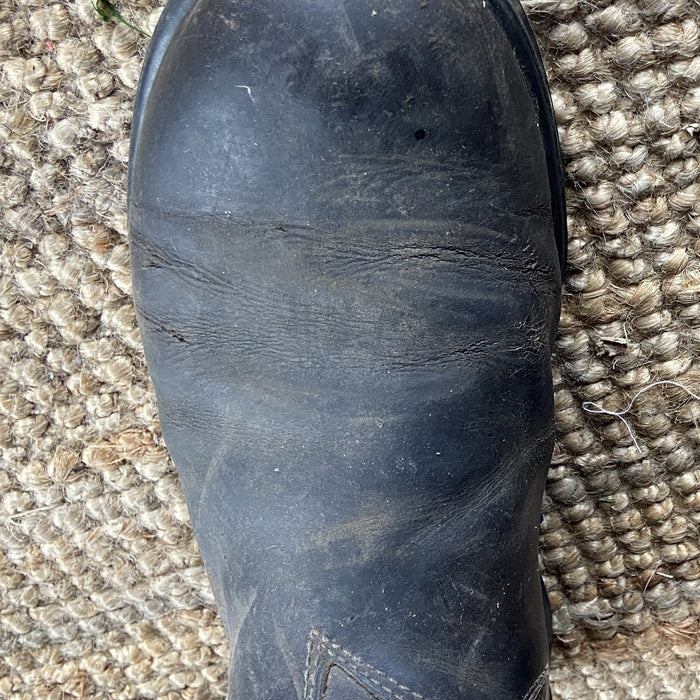
Slow down on the leathers R.M. Williams says should not be conditioned at all. Its leather guide says burnished leather, tanbark kangaroo and nutmeg yearling take no cleaner or conditioner, only its Natural Stockman's Polish. Renapur says the same of fully aniline leather. On those boots, use neither product.
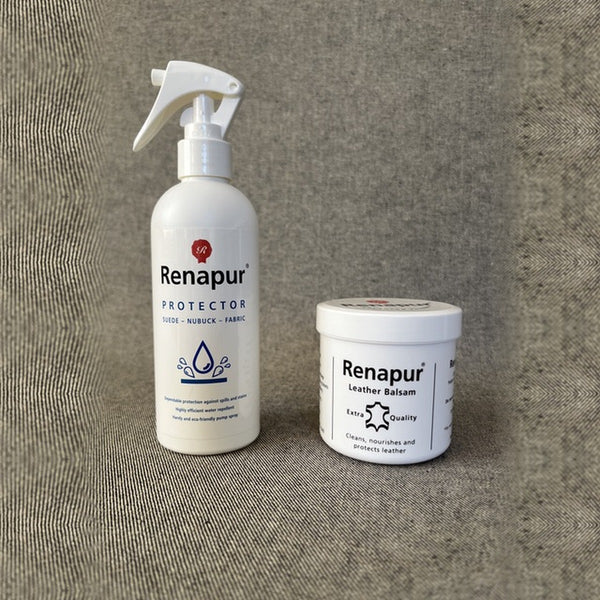
Suede and nubuck boots get no conditioner from either maker. R.M. Williams sells a suede protector and cleaner for them, and our Suede, Nubuck and Fabric Protector does the same job. If you also polish your boots, Renapur says to apply the polish, let it dry completely, then apply the balsam.
Which is better for saddles and tack?
R.M. Williams sells a separate Saddle Dressing for this, not its boot conditioner. It describes the dressing as a creamy blend of neatsfoot oil and waxes, made to preserve, condition and nourish all types of leather and to stand up to the harsh Australian climate, and says it will not go rancid or over soften leather. It comes in a 250ml size for $29 and is not for suede.
Renapur uses the same balsam on tack as on boots, every 2 to 4 weeks for hard working gear, and the 1 litre tub is the saddlery size. Our saddle and tack guide walks through it.
Will either darken leather?
Both can. R.M. Williams says its conditioner will darken aniline and pull up leathers, and that on some of its oily leathers the darkening lasts only a short time while the oils absorb. Renapur says its balsam will darken aniline leather, suede and nubuck, which is why it is not recommended on them.
Both makers give the same advice: test a hidden area first. More in does Renapur darken leather?

The honest verdict
- Buy R.M. Williams Leather Conditioner if you only look after R.M. Williams boots, want the bootmaker's own product, do not mind buffing, and want the lowest price per millilitre.
- Buy R.M. Williams Saddle Dressing for a saddle if you prefer a neatsfoot oil dressing that soaks in.
- Buy Renapur Leather Balsam if you want one jar for boots, bags, lounges, car seats and tack, a thin coat with no buffing, and stock shipped free from within Australia.
For one pair of boots, the Renapur Leather Balsam 50ml goes a long way; for boots and the rest of the house, start with the Renapur Leather Balsam 200ml. Every size is in our leather conditioner range. Renapur facts come from the Renapur help centre; R.M. Williams facts from its Leather Conditioner page, its Saddle Dressing page and its boot maintenance guide.
Shop the routine
Keep reading
Frequently asked questions
Can I use Renapur on R.M. Williams boots?
Yes, on smooth, finished leather such as black or chestnut yearling and kangaroo. Test a hidden spot first and apply a very thin coat. Keep it off burnished leather, tanbark kangaroo, nutmeg yearling and suede, which R.M. Williams says take no conditioner.
What is R.M. Williams leather conditioner made of?
R.M. Williams lists beeswax, lanolin and a natural blend. Its Saddle Dressing is a different product: neatsfoot oil, waxes, water, an emulsifier and preservatives.
How often should I condition R.M. Williams boots?
R.M. Williams recommends every 2 to 3 months, however often you clean or polish them, and warns against over conditioning because leather needs to breathe. Renapur suggests every 2 to 4 weeks for work and hiking boots that see rain and mud, and a top up whenever the leather looks dry or stops shedding water.
Do I need to buff after conditioning?
With R.M. Williams Leather Conditioner, yes: let it soak in, then buff off the excess to a soft sheen. With Renapur, no, as long as the coat is thin. Wipe off anything that still feels greasy after a few minutes.