If you want to know how to waterproof leather boots, start with an honest distinction: a wax balsam makes smooth leather water resistant, so rain beads and rolls off, but no conditioner turns a leather upper into a sealed, waterproof boot. This guide covers what a wax coat can do, how to apply it so it actually sheds water, and where its job ends.
Quick answer
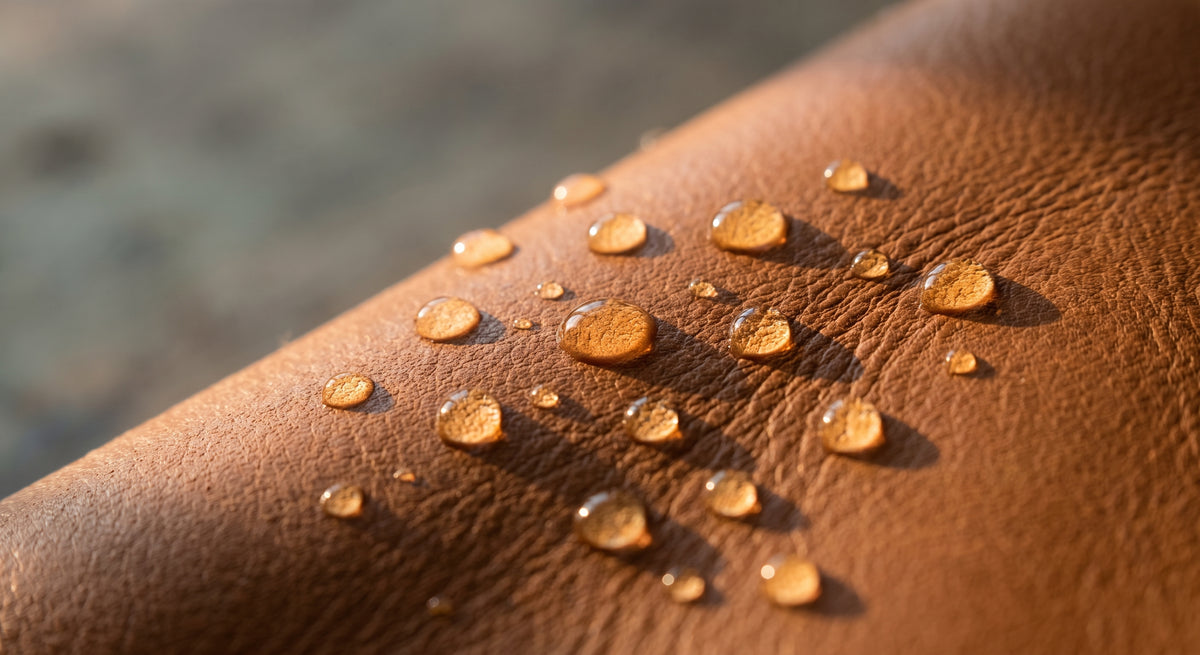
Brush the boots clean, let them dry, then work a thin coat of a wax leather balsam into the whole upper, paying extra attention to the welt, the seams and the crease across the toe. Leave them a few hours. Water should then bead on the surface instead of soaking in. Reapply when water stops beading. For suede, nubuck or fabric panels, use a protector spray instead of balsam.

Water resistant versus waterproof: what balsam actually does
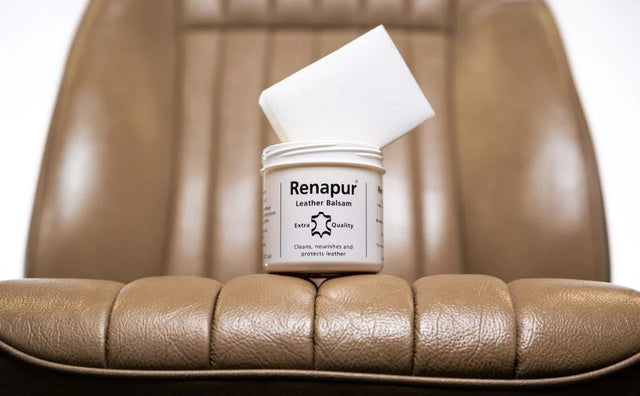
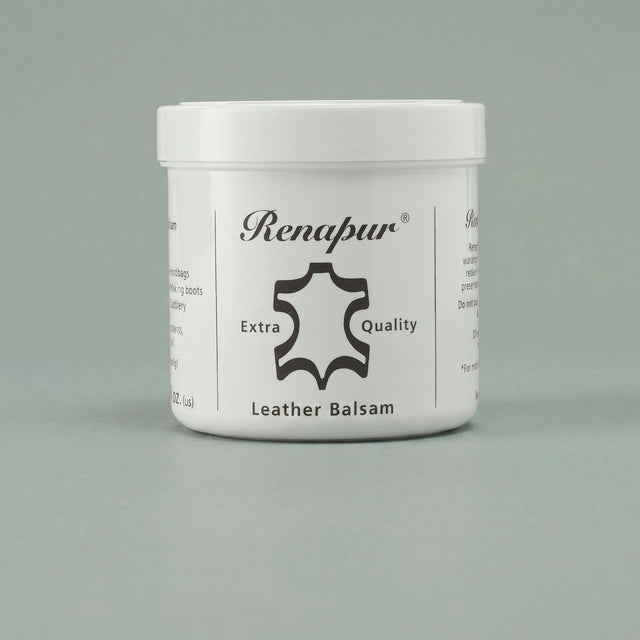
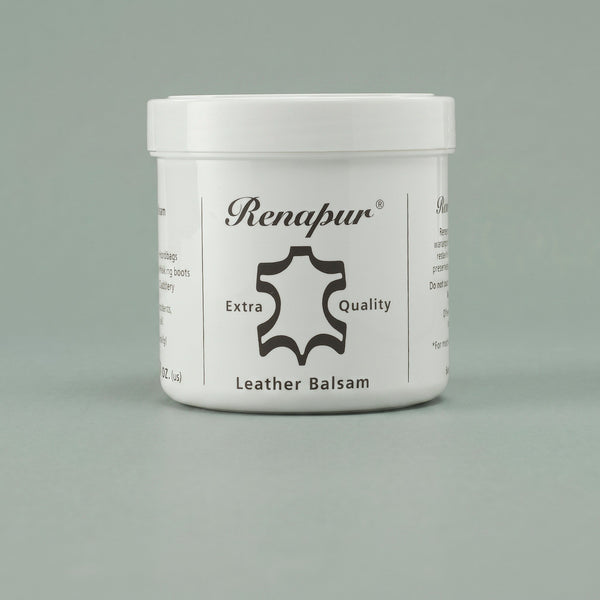
Renapur Leather Balsam is made from natural ingredients, including beeswax, carnauba wax and jojoba oil, with no solvents or silicones. Renapur describes it as cleaning, conditioning, polishing and helping to waterproof smooth leather in one coat. The wax makes water bead on the surface instead of soaking in, and the oils keep the leather supple so it is less likely to crack at the flex points.
What it does not do is seal the boot. Water does not only come in through the leather. It finds its way through stitching holes, the gap around the tongue, eyelets, and the join between upper and sole. A wax coat cannot close those paths, and it is not a membrane. Our own guide to caring for leather work boots puts it plainly: conditioning gives good water resistance, not a guarantee.
Stand in a creek and expect wet socks. Wet grass, a muddy paddock or a day of drizzle is what a conditioned boot handles.
What you need
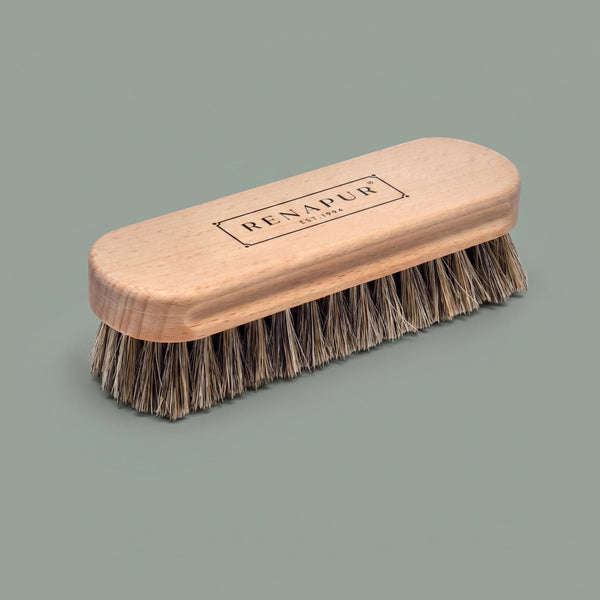
- A soft brush to lift dust and dried mud. A horsehair brush, such as the Renapur Horsehair Brush, also works balsam into seams and welts where a sponge cannot reach.
- A leather cleaner if the boots are genuinely dirty, not just dusty.
- Renapur Leather Balsam and the sponge it goes on with.
How to waterproof leather boots, step by step
- Brush them down. Get dust and dried mud off first, including from the welt, so grit is not worked into the leather.
- Clean only if they need it. If they are grimy, use a leather cleaner and let them dry at room temperature.
- Start with dry boots. Wax will not take on wet leather. If they came home soaked, dry them first (see below).
- Load the sponge lightly. Renapur's rule of thumb: if you can see balsam on the sponge, you are using too much.
- Work it into the whole upper. Small circles, panel by panel, including the tongue and the gusset where water often gets in.
- Give the weak points extra attention. The welt, the stitching and the crease across the toe. Use the brush to push balsam into the stitching and any brogueing.
- Leave them for a few hours. No buffing is needed. If the surface still feels tacky after a few minutes, wipe the excess off with a soft cloth. A brush over the top afterwards raises a shine if you want one.
Keep balsam off rubber soles. It does not harm them, it simply does nothing for them.
Suede, nubuck and fabric boots need a different product
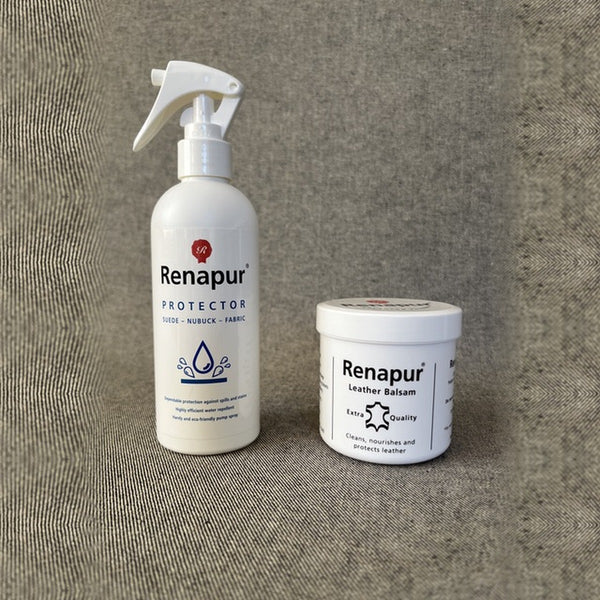
Balsam is made for smooth leather. On suede and nubuck it flattens the nap and darkens the colour, and that is not easily undone. For napped leather and fabric uppers, the Renapur Suede, Nubuck and Fabric Protector guards against water and stains without changing how the material looks or feels.
- Make sure the boot is clean and dry.
- Spray evenly from a short distance in a well ventilated spot, including the seams.
- Let it dry fully before wearing. Renapur's help centre says the material looks darker while it is wet and returns to its original colour as it dries, which takes around 24 hours.
- Reapply after heavy use or a soaking.
One caveat: some boots arrive already treated with a repellent from the factory, and a protector will not soak into a coating like that. It does its job once that factory treatment has worn off or the boots have been washed.
On a boot that mixes smooth leather and suede, treat each material with its own product: balsam on the smooth panels with a small sponge, protector on the suede, and mask the suede if you are worried about stray balsam.
Does balsam affect Gore-Tex or other lined boots?
No, according to Renapur. Its help centre says the balsam lets the leather breathe naturally, so it will not reduce the effectiveness of a Gore-Tex lining. That matters, because the membrane is what makes a lined boot waterproof. The balsam's job on a lined boot is to keep the outer leather supple and stop it soaking up water.
If a lined boot has started leaking, the problem is usually the membrane or a seam, and conditioning will not fix it.
Drying wet boots without undoing the work
Pull the insoles out, stuff the boots loosely with newspaper, and leave them somewhere with moving air. Keep them away from heaters, fires and direct sun, which drive the remaining oils out of leather that is already stressed.
Once they are fully dry, give them a thin coat of balsam. Water carries oils out of leather on its way through, so a boot that has been soaked needs conditioning more than one that has only been dusty.
How often to reapply for water resistance
There is no fixed date. The simplest test is to watch the toe in the rain or flick a few drops of water on it. While water beads, the coat is working. When it starts soaking in and darkening the leather, it is time for another thin coat.
- Work and hiking boots used in wet, dust or mud: roughly monthly, and more often through a wet season or after heavy rain.
- Dress boots worn in town: every two or three months.
- Boots going into storage: condition them before they go away, so they do not dry out sitting in a hot cupboard.
More is not better. Renapur's help centre says residue building up in the stitching is a sign you are applying too often. Little and often beats one heavy coat. For which type of product suits which boots, see the best leather conditioner for boots in Australia.
Shop the routine
Keep reading
Where to start
Test the balsam on a small hidden spot first, such as the inside of the tongue, and check it in daylight once dry. Then do the whole boot, welt and seams included. If you have both leather and suede boots, browse the outdoor range or the footwear range, or see every leather conditioner size.
Frequently asked questions
Can you make leather boots fully waterproof?
No, not with a conditioner alone. A wax balsam makes smooth leather water resistant so rain beads off, but water can still enter through seams, eyelets, the tongue and the sole join. A fully waterproof boot relies on a waterproof membrane or a sealed construction, not on a surface treatment.
Is Renapur Leather Balsam waterproof?
Renapur describes it as helping to waterproof smooth leather, not as making it waterproof. The beeswax and carnauba wax leave a water resistant layer that makes water bead on the surface instead of soaking in. Reapply when water stops beading.
Can I use leather balsam on suede or nubuck boots?
No. Balsam flattens the nap of suede and nubuck and darkens the colour, and the change is hard to reverse. Use the Renapur Suede, Nubuck and Fabric Protector on napped leather and fabric instead.
Will balsam stop my Gore-Tex boots breathing?
No. Renapur's help centre says the balsam lets leather breathe naturally, so it will not reduce the effectiveness of a Gore-Tex lining. Apply a thin coat so the surface is not clogged with excess product.
Should I condition boots while they are wet?
No. Dry them first, slowly and away from heat, with the insoles out and newspaper inside. Condition once they are completely dry, because water draws oils out of the leather and the wax will not take properly on a wet surface.