Learning how to clean suede shoes is mostly learning to work dry. Suede and nubuck are napped leathers, and almost every mark on them comes out with a soft brush, an eraser and patience, while most liquids leave them darker or patchy. This guide goes through the routine clean, how to handle each kind of mark, and how to protect the shoes once they are clean.
Quick answer
Let the shoes dry completely, then brush them with a soft brush, first in one direction to lift dirt and then against the nap to raise it. Rub scuffs and shiny patches gently with a suede eraser, then brush again. Once the shoes are clean and dry, spray them with a suede protector and let them dry for a full day. Keep conditioners, balsams and leather cleaners off suede.
Before you start: check what you are cleaning
Suede is the inside face of the hide, with a longer, softer nap. Nubuck is the outer grain sanded to a short, velvety finish. Both take the same care, though nubuck's shorter nap needs a lighter hand with the brush.
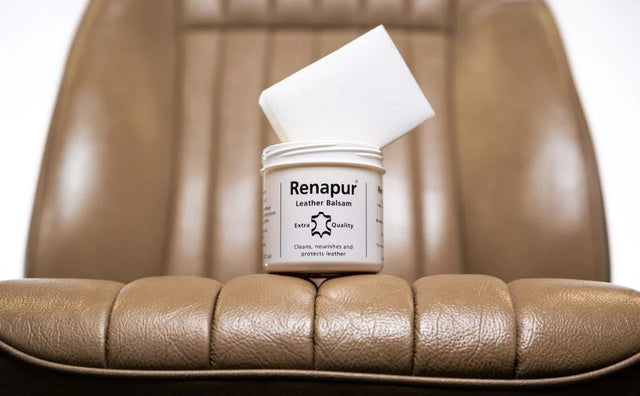
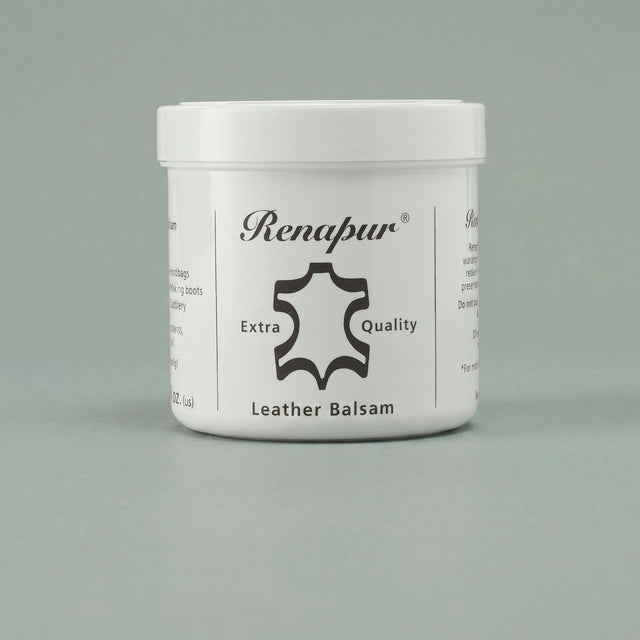
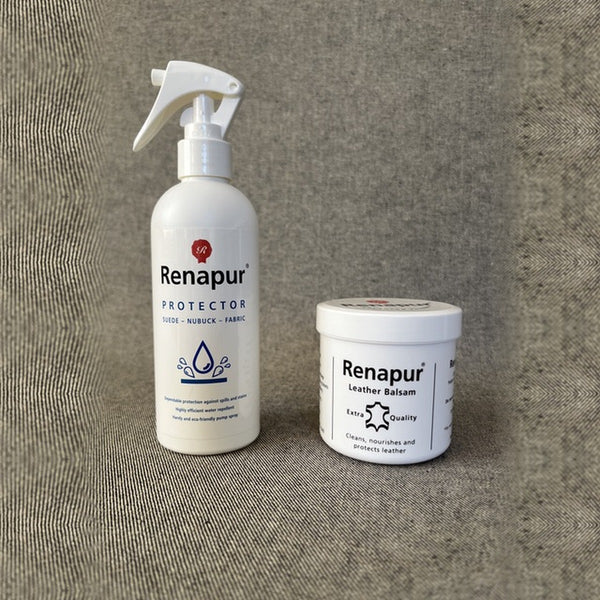
Many suede shoes and sneakers also have smooth leather toe caps, heel counters or fabric panels. Look at each panel before you start, because each one needs its own product. We have a separate guide on what not to use on suede and nubuck, so we will not repeat the full list here. The short version: anything made for smooth leather, including Renapur Leather Balsam and Renapur Leather Cleaner Spray, stays off the suede.
What you need
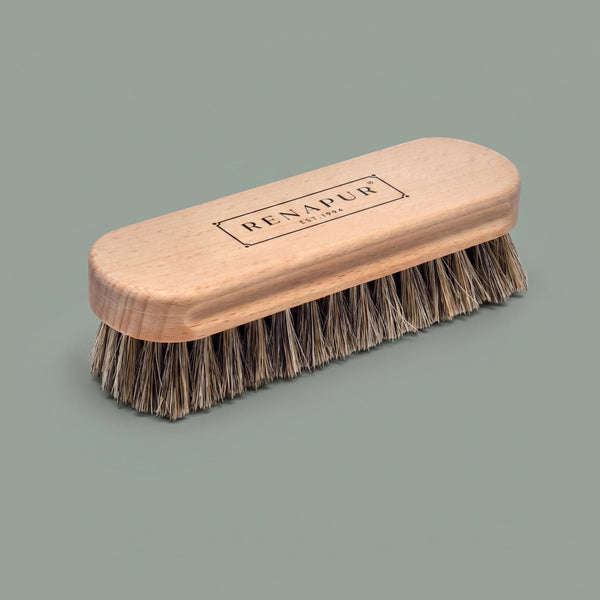
- A soft brush that has never touched wax. The Renapur Horsehair Brush is soft enough for suede and nubuck without marking the nap. If you also polish smooth leather, keep a second brush for that, because a brush that has been through balsam will put wax on suede.
- A suede eraser, or a clean pencil eraser at a pinch.
- Plain newspaper or paper towel for drying.
- A suede protector spray for once they are clean.
The routine clean, after every few wears
- Knock the soles together outside to shake off loose grit.
- Brush the whole upper lightly in one direction to lift dust.
- Brush back against the nap to stand it up again. This is most of what suede care is.
- Finish with light strokes in one direction so the colour looks even.
Two minutes, done regularly, stops dirt working down into the nap where it is much harder to shift.
How to clean suede shoes, mark by mark
Dried mud
Leave it. Wet mud smeared with a brush or cloth goes deeper into the nap. Once it is bone dry, crumble off the thick pieces with your fingers, then brush the area in short strokes. Finish by raising the nap against the grain.
Rain spots and water marks
Let the shoes dry slowly at room temperature first (see the next section). Light rain spots often disappear with a good brush once the suede is dry. A hard tide line, where a wet edge dried, is more stubborn. Brush the whole panel so the nap is even across it, not just the mark. If a line is still there after that, it has set, and a cobbler is the next step.
Scuffs and shiny, flattened patches
Shine on suede is crushed nap, usually on the toe or where shoes rub together. Rub the patch gently with a suede eraser, using light pressure and short strokes, then brush against the nap to lift it. Do not scrub. Suede is thin, and heavy rubbing in one spot wears it bald.
Salt and sweat lines
Let the shoes dry, then brush the line firmly with the nap and against it. Faint lines often brush out. Heavy salt marks on dark suede may not come out completely, and it is better to accept a faint line than to wet the shoe and make it worse.
Oil and grease
This is the honest caveat. Oil soaks into suede almost immediately, and nothing in the Renapur range is a stain remover for suede. Blot fresh oil straight away with paper towel, pressing without rubbing, and take valuable shoes to a cobbler. Brushing an oil spot only spreads it.
Drying wet suede shoes
Heat is what turns wet suede stiff and crusty. Take out the insoles and stuff the shoes loosely with newspaper or paper towel to hold their shape and draw out moisture. Leave them somewhere with moving air, away from heaters, hair dryers and direct sun. Change the paper if it gets soaked. Brush them only once they are fully dry, which may take a day or more.
Protect them once they are clean
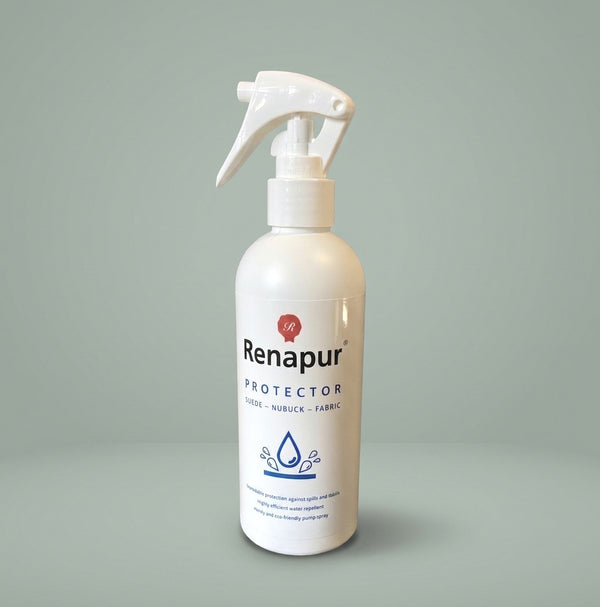
A protector does its best work on suede that is already clean, because it locks in whatever is on the surface. The Renapur Suede, Nubuck and Fabric Protector guards suede, nubuck and fabric uppers against water and stains without changing how the material looks or feels.
- Make sure the shoes are clean and completely dry.
- Test on a small hidden spot first, such as the inside of the heel.
- Spray evenly from a short distance in a well ventilated spot, covering the seams.
- Brush gently while it is still damp to work it into the nap.
- Leave them to dry fully before wearing. Renapur's help centre says the colour looks darker while wet and returns as it dries, which takes about 24 hours.
Renapur suggests reapplying roughly every six months, or sooner after heavy use or a soaking. New shoes that come pre-treated from the factory will not absorb a protector until that treatment wears off, so save it for shoes you have been wearing a while.
Suede sneakers with mixed panels
Treat each panel separately. The suede and any fabric or canvas panels take the protector. Smooth leather panels can take a thin coat of balsam, applied carefully with a small sponge so none strays onto the suede. Mask the suede edge with tape if the panels are close. Rubber soles can be cleaned separately with warm soapy water and a soft brush, kept well away from the suede.
Shop the routine
Keep reading
Where to start
Brush your suede pairs today, even the clean ones, then protect them while they are in good condition. You will find the brush and protector in the footwear range. For the smooth leather shoes and boots in the same cupboard, see our leather conditioner range, and for suede jackets and bags, read how to care for a leather jacket and handbag.
Frequently asked questions
Can you clean suede shoes with water?
It is best not to. Water darkens suede while wet and often dries as a tide mark, so clean suede dry with a soft brush and a suede eraser. If the shoes do get wet, let them dry slowly at room temperature, then brush to raise the nap.
Can I use leather cleaner or leather balsam on suede?
No. Products made for smooth leather soak into the nap and usually darken it permanently. Renapur does not recommend its Leather Cleaner Spray or Leather Balsam on suede or nubuck. Use a soft brush to clean and a suede protector to protect.
What is the best brush for cleaning suede?
A soft brush that has never been used with wax or polish. Renapur's horsehair brush is soft enough for suede and nubuck without marking the nap. Keep it separate from any brush you use with balsam, so wax never reaches the suede.
How do you get a shiny patch out of suede?
Rub it gently with a suede eraser, then brush against the nap to stand it back up. Shine is flattened nap, usually from rubbing. Use light pressure, because heavy scrubbing in one spot can wear the suede thin.
Does suede protector change the colour of shoes?
Only while it is wet. Renapur's help centre says the item looks darker while damp and returns to its original colour once dry, which takes about 24 hours. Test a hidden spot first to check you are happy with the result.
How often should I protect suede shoes?
Roughly every six months, or sooner after heavy wear or a soaking. Always clean and dry the shoes first, because the protector seals in whatever is on the surface.